

TDM Rural Circular Economy — The Micro-Hub Model
A decentralized model for biomass collection, preservation, and rural services.
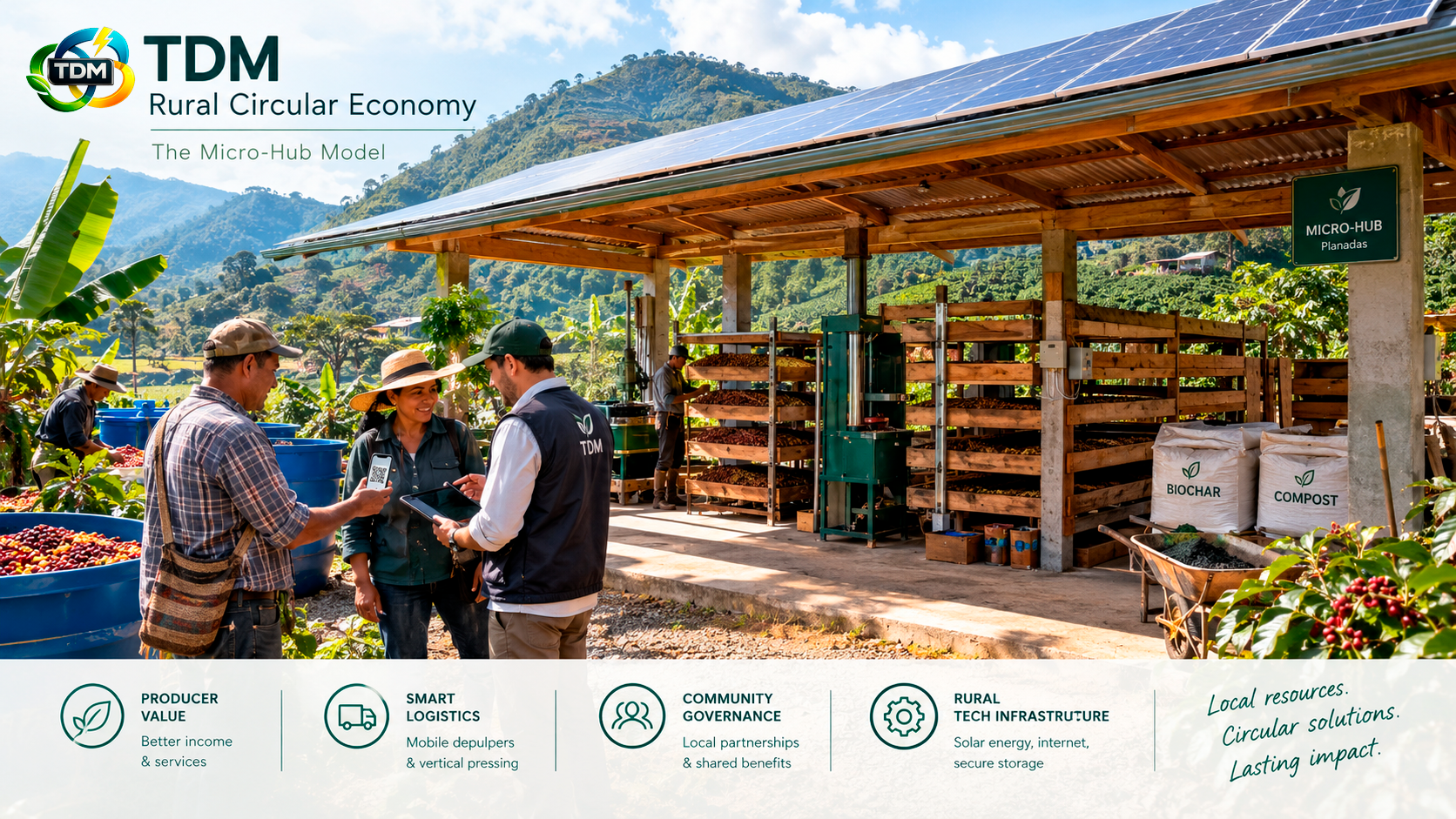
The Micro-Hub Architecture
From agricultural residue to a territorial infrastructure of value.
Coffee Pulp: A Resource to Preserve
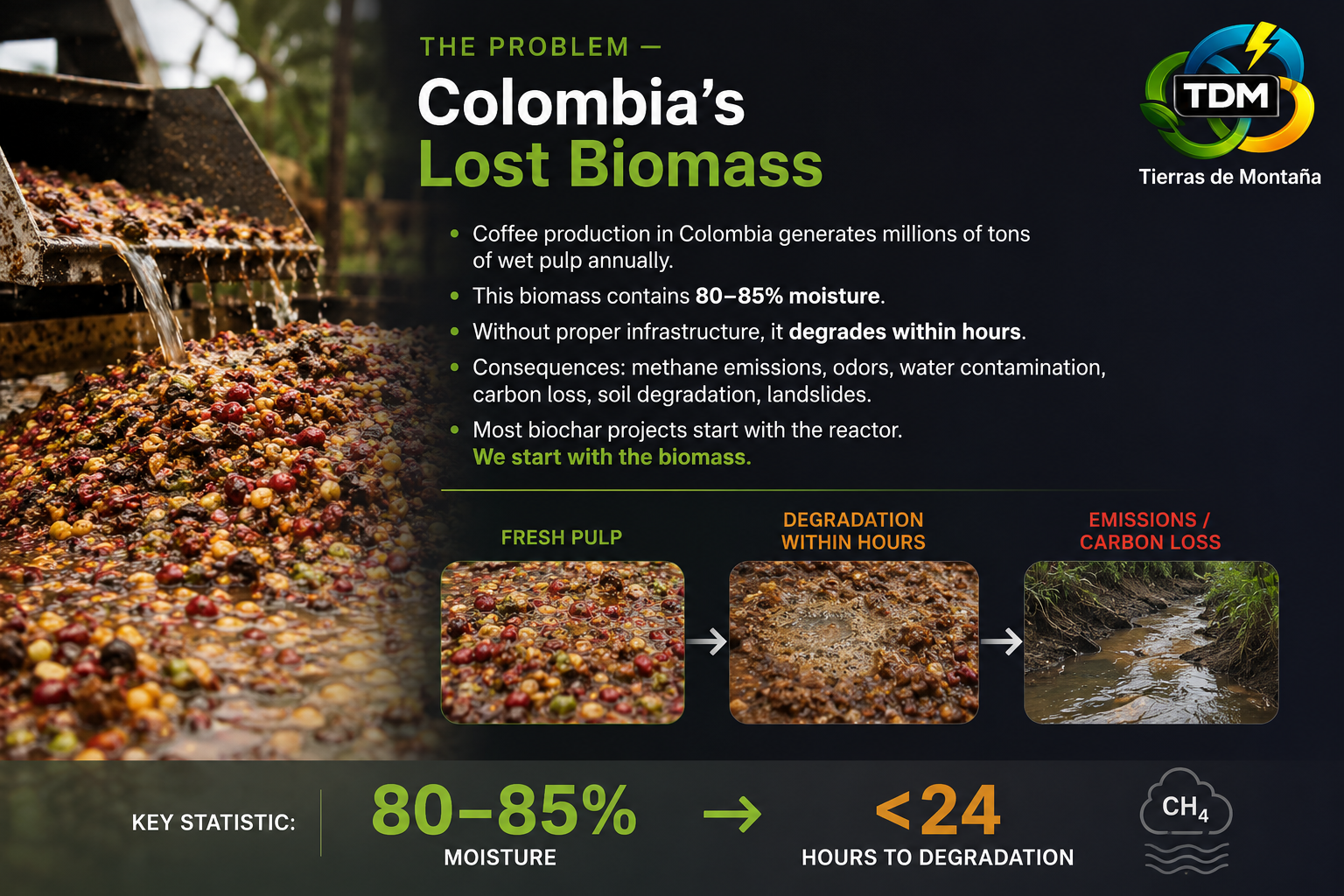
Coffee processing generates organic residues whose valorization depends on their collection, condition, moisture, and rapid handling.
Fresh pulp contains a lot of water (80-85%) and degrades within hours. When scattered across farms, its recovery, transport, and preservation become logistical as well as technical problems.
- How much pulp and zoca can be realistically recovered?
- What pressing and drying methods are locally adapted?
- What is the real cost of collection and transport?
The Micro-Hub Model
The Micro-Hub is a decentralized module connecting several farms to a future valorization chain. Its initial role is deliberately limited: collection, conditioning, and controlled drying of coffee pulp.
| Parameter | Working Target | Status |
|---|---|---|
| Participating farms | 5 to 12 | Working Hypothesis |
| Annual wet pulp | 10 to 240 tonnes | Working Range |
| Annual dry-matter equivalent | 2 to 48 tonnes | Indicative Estimate |
| Thermal transformation | Downstream stage | Outside initial scope |
The Four Indissociable Pillars
1. Economy: Negotiated and Reciprocal Exchange
The producer provides biomass. In return, they access services or receive remuneration. The model assumes neither free biomass nor free services.
2. Logistics: Connecting Farms to the Hub
Mobile depulpers, collection points, vertical pressing, and transport of prepared biomass.
3. Governance, Inclusion, and Security
Design with the territory. Explicit agreements, consultation with existing shops, and security risk assessment.
4. Technique: Proportionate Infrastructure
Adapted cover, equipment dimensioned after tests. The concrete slab is neither automatically necessary nor automatically useless.
The Economic Model
The model relies on two distinct relationships: the biomass transaction and the service relationship.
| Scenario | Description | Points of Vigilance |
|---|---|---|
| Scenario A: Purchase | The Hub buys the biomass and bills services separately. | Requires working capital. |
| Scenario B: Exchange | Price articulated with agreed services. | Value must be documented. |
| Scenario C: Hybrid | Part paid in cash, part in services. | Must be tested with producers. |
Traceability, Evidence, and MRV
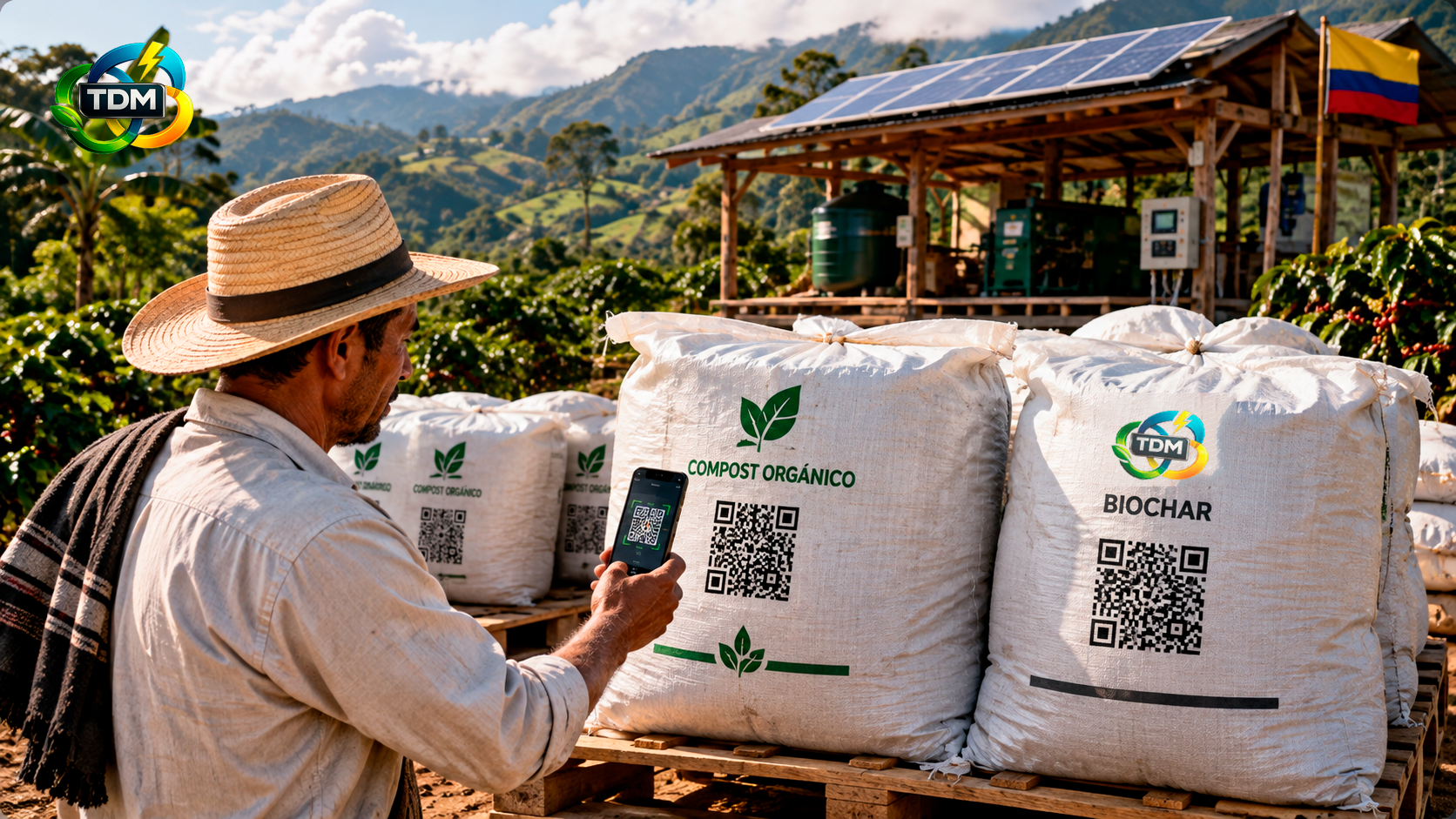
A. Agronomic Traceability via QR Code
The QR code links a product batch to information: batch identity, composition, recipient, declared use (crop, plot), applied quantity, and subsequent photographs.
Geolocation must remain optional and based on explicit consent.
B. Carbon Traceability and MRV
Carbon accounting is a distinct pathway. It requires documenting the origin of materials, production conditions, product quality, quantities sold, and final destination. A QR code does not replace an MRV system.
The Planadas Pilot Protocol
The first Micro-Hub is a technical, economic, and territorial validation pilot.
- Step 1: Territorial Diagnostic. Identify farms, assess volumes, map distances.
- Step 2: Preservation Trials. Define operations, compare solutions, measure moisture.
- Step 3: Economic Validation. Test purchase terms, verify real costs.
Industrial Transformation: BIO-CARBON-2
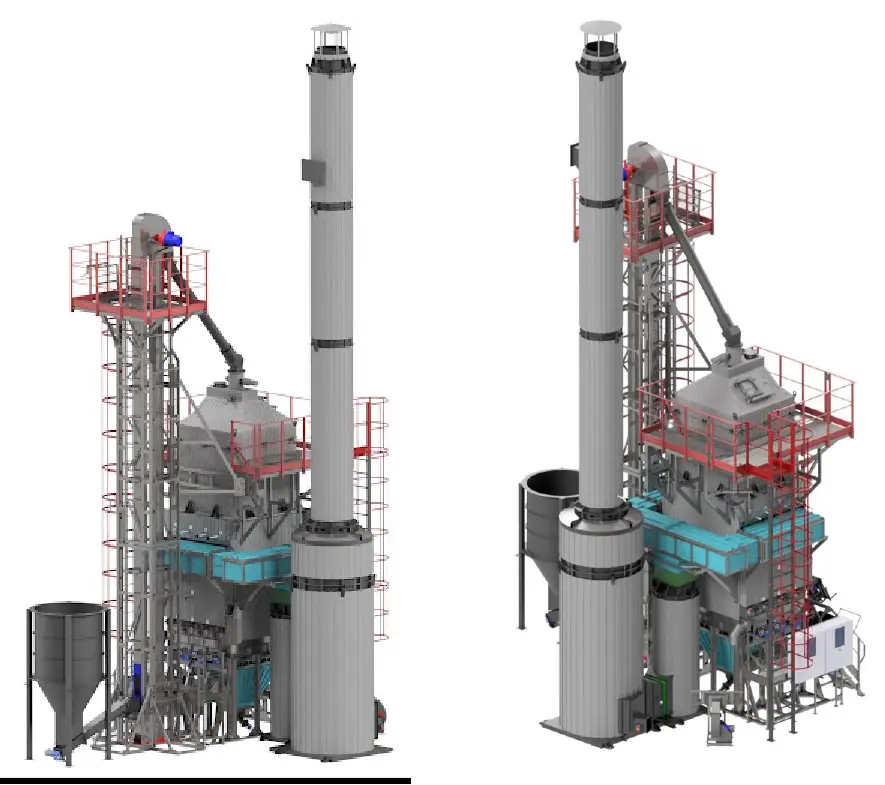
The biomass preserved by the Micro-Hub is intended for a future Transformation Center, equipped with the BIO-CARBON-2 continuous pyrolysis system.
1. Main Technical Characteristics (Supplier Data)
| Parameter | Value |
|---|---|
| Production capacity (finished product) | 70–200 kg/h, depending on supplier configuration* |
| Electrical power | 13.6 kW (to be confirmed: exact nature and scope) |
| Feedstock moisture content | Specification to be confirmed: <12% or <15% |
| Operating mode | Continuous 24/7 announced by supplier |
The initial Micro-Hub working range is 10–240 tonnes of wet coffee pulp per year. The BIO-CARBON-2 supplier states a nominal finished-product capacity of 70–200 kg/h. A reliable sizing comparison requires a mass balance. The strategic concept is a shared Transformation Center supplied by a network of Micro-Hubs.
The supplier's technical description specifies a feedstock moisture content below 12% in one section, while another indicates below 15%. The applicable acceptance threshold must be confirmed in writing by the supplier. A moisture threshold alone does not demonstrate energy self-sufficiency.
2. Engineering & Modeling
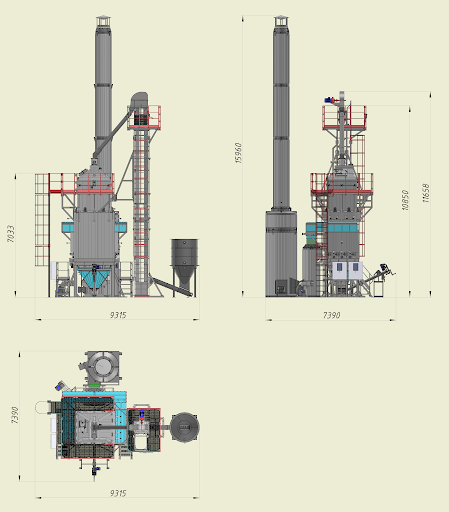
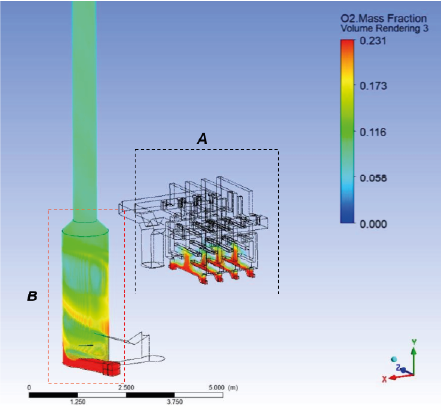
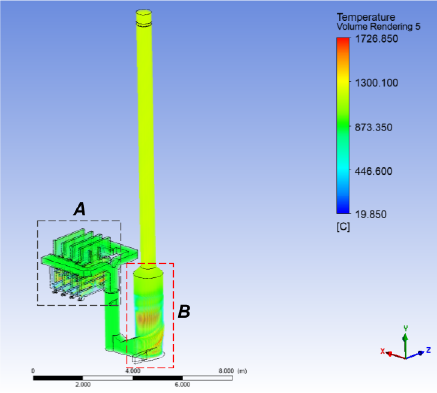
3. Understanding the Thermal Models (Figures 6 & 7)
The engineering simulations supplied with the equipment documentation illustrate the proposed thermal configuration. They are design information, not independent evidence of operating performance or emissions compliance.
- Heat Distribution: The simulation illustrates temperature distribution. Actual operating conditions must be confirmed during commissioning.
- Gas Residence Time: The manufacturer reports a calculated gas residence time of at least three seconds. This does not establish complete pollutant destruction or regulatory compliance.
- Startup and Energy Balance: Actual fuel requirements and energy self-sufficiency remain to be demonstrated.
Potential Outputs & Value Chains
These are potential pathways, not guaranteed results.
| Output | Description |
|---|---|
| Biochar | High-carbon material for soil amendment. |
| Enriched Compost | Formulations AA, AB, AC to be defined. |
| Carbon Credits | Subject to MRV methodology and certification. |
| Heat & Energy | Recovery of excess heat for drying or conversion. |
Partner with TDM on the Planadas Pilot
TDM has developed a structured conceptual architecture connecting coffee producers, decentralized biomass collection and conditioning, and a shared industrial transformation facility. The next step is to validate its technical, operational and economic feasibility with qualified partners.
Contact TDM to discuss a technical review, a potential partnership or the preparation of the Planadas pilot.